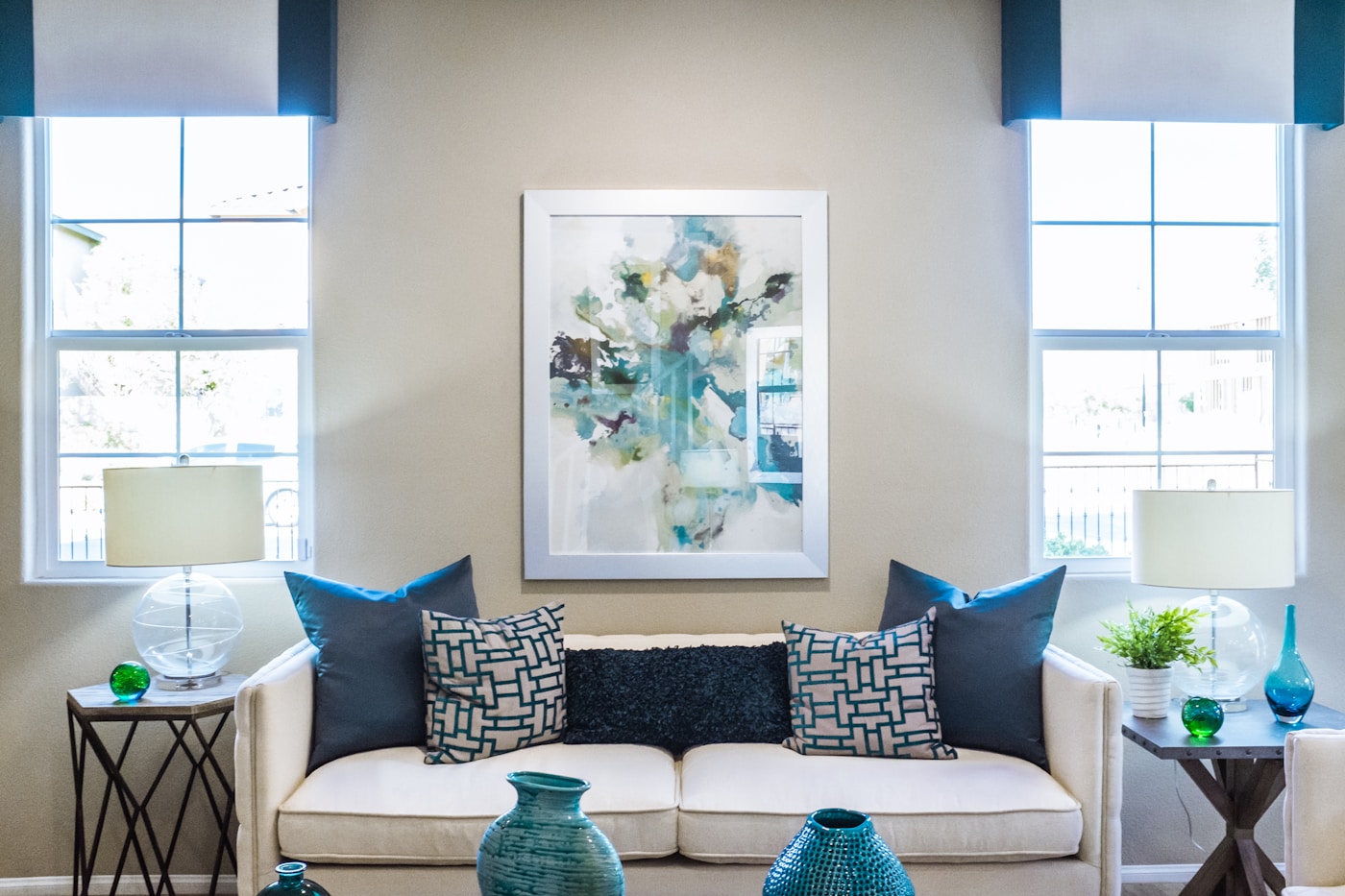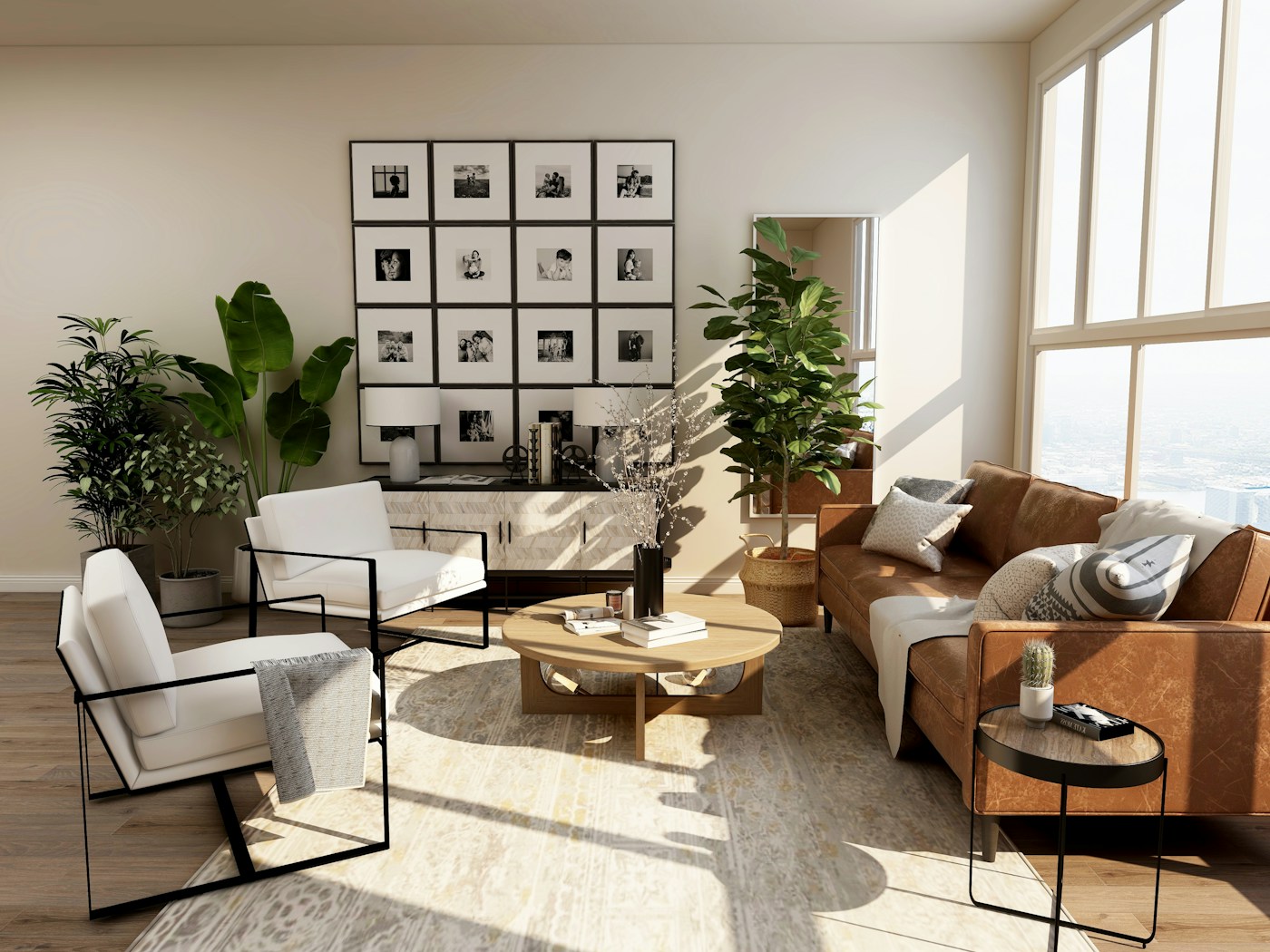
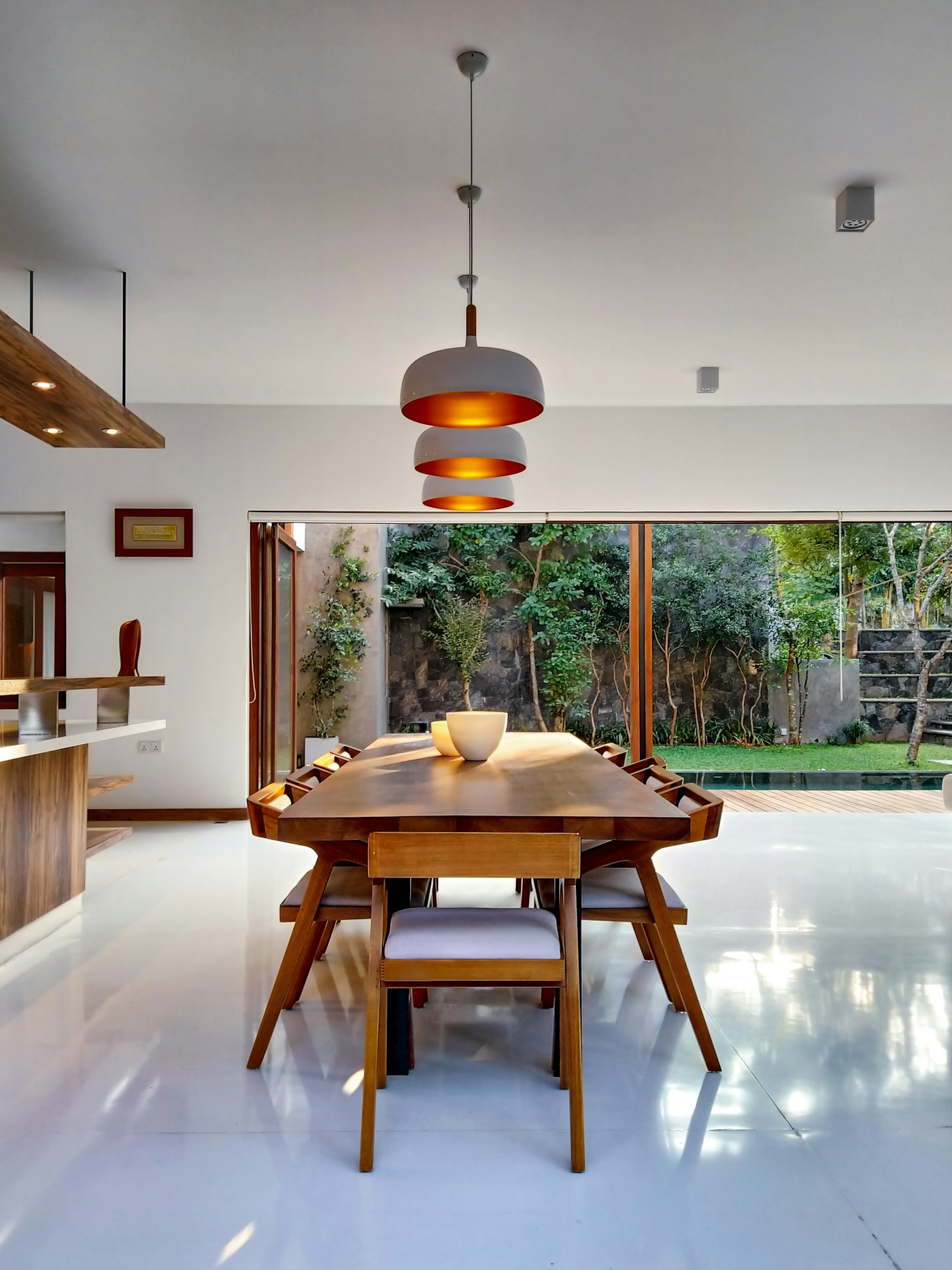
We design more small homes in Kolkata than large ones. After hundreds of compact apartments — many in Salt Lake, Behala, Tollygunge and Garia — these are the moves that consistently deliver more space, more light and more storage.
1. Float everything
Wall-mounted vanities, floating TV units, suspended wardrobes. Visible floor — even a strip of it — instantly enlarges a room. We extend this to skirting (40 mm flush) and door frames (zero-architrave).
2. One material, three rooms
Carry one finish — say, fluted oak veneer — across living, dining and entry. It makes 600 sqft read as one continuous space, instead of three small ones.
3. Tall, not wide
Cabinetry should reach the ceiling. The 200 mm gap above standard wardrobes is dead space that visually compresses the room and collects dust.
4. Pocket doors
A standard swing door eats 9 sqft of usable area. A pocket door eats zero. We specify pocket doors for bathrooms, store rooms and the second bedroom.
5. The 'hidden' study
A 600 mm fold-down desk built into the wardrobe carcass adds a workstation without losing the bedroom. Add a magnetic pinboard above for muscle memory.
6. Mirror — but only once
A floor-to-ceiling mirror on one wall (usually opposite a window) doubles the perceived volume. Two mirrors create vertigo. One is the rule.
7. Linear lighting, not central
Skip the central chandelier. Use cove + spot lighting layered along the perimeter. Light that hugs the walls reads as architecture; light that floats overhead reads as bling.
8. Custom-fit the kitchen tall unit
In small kitchens, every centimetre matters. We build the tall unit to the exact gap — not the nearest 100 mm — and integrate the fridge, microwave and dustbin inside. Result: 30% more storage in the same footprint.
9. One bold material, everywhere else neutral
Small homes can carry one bold gesture — a green marble splashback, an Italian terrazzo floor, a brass-inlaid headboard. Pair it with otherwise calm walls and finishes. The eye lingers on the hero and forgets the room is compact.
Small homes don't need more design. They need less of the wrong things and more of the right ones.